Posts

Outpatient Management Software

Image
Patient who leaves the hospital after consulting doctor, diagnosis and treatment refers to outpatient. Outpatient service is an essential part for hospitals during the treatment of a patient. Outpatient module serves an entry point to take an appointment with the Consultant Doctor for Medical Consultations and diagnosis. Impression to a hospital by a patient begins at the OPD. This impression often influences the patient's sensitivity to the hospital and therefore it is essential to ensure that OPD services provide a good experience for customers. Mostly 8 to 10 per cent of OPD patients need hospitalization. Now a days it is important on continuous quality improvement, flexibility and innovation at the entry level of health service. This module supports doctors to take better and timely consultation decisions by providing instant access to comprehensive patient information. Patient visits are divided into New, Follow-up and Review. This module also handles request...


PHARMACY MANAGEMENT SYSTEM

Image
Pharmacy Management System is a pharmacy software designed for any pharmacy. This software is used for pharmacy data management. They are defined as computer systems designed specifically for pharmacy departmental use, with functionality for the management of pharmacy and dispensing processes, such as medicine labeling, patient medication records, decision support for drug interactions and other warnings, stock control, ward inventory management, order processing and functions to support pharmacy manufacturing processes in hospitals. The current Pharmacy system is done manually i.e. almost all works on the pharmacy organization is done by papers. Thus, for medicine data search in order to buy, audit, and other related works. Here the data’s can be accessed anyone who entered to the pharmacy like friends or other people having no relationship to pharmacist. The pharmacists work in tedious situation because of the upper reasons. By this method arrangement of medicine on the ...

Software Development

Image
Software development is the collective processes involved in creating software products ie it is the process of conceiving, specifying, designing, programming , documenting, testing, and bug fixing involved in creating and maintaining applications, frameworks, or other software components .It is also known as application development or software design . It may include research, new development, prototyping, modification, reuse, re-engineering, maintenance, or any other activities that result in software products.Most methodologies share some combination of the following stages of software development: 1) Identification of required software 2) Analysis of the software requirements 3) Detailed specification of the software requirements 4) Software design 5) Programming 6) Testing These stages are often referred to collectively as the software development lifecycle, or SDLC . Different approaches to software development may carry out these stages in di...

Features of Hotel Management Software

Image
Satisfaction of the customers is the prime concern of any hotel business .To meet the demand of an increasing number of customers the hotels require to develop their management system so that they can serve the customers in the best possible way. Some important features of the hotel management software : Booking and Reservation : Reservation center is the place where a hotel manager can check current bookings and availability, take new reservations and manage them. It also provides an easy reservation and booking system and helps them to generate reports in regards to the income and expenses of the operation any time of the day and from anywhere. The automated system updates the status of the property, rates and discounts on the room reservation in real time, giving comfort to the customers from any kind of confusion. Front Office Operations : Front office operations includes check-in, guest profile information, room allocation, checkout, Night Audits, Housekeeping...

Advantages of ERP for the Manufacturing Industry

Image
The manufacturing industries are highly dynamic and competitive in nature. ERP ( Enterprise Resource Planning ) technology helps these industries by integrating all aspects of business like operations, resources, reporting, monitoring, sales, accounting and finance etc. and empowers businesses to function smoothly by maintaining a single database. ERP has lot of advantages in manufacturing industry.Some of them are following. 1. With greater adaptability ERP automates and streamlines business processes A complete ERP solution streamlines business processes and drives automation for manufacturing organizations. By streamlining the processes, all data is available in a centralized location with complete visibility in all functionalities – development, designing, inventory, procurement, production, finance, sales, delivery and more. ERP help to bring efficiency ,improves productivity and helps companies maintain their customer commitments. By automating the processes...

Hospital Management System-Features, Objectives

Image
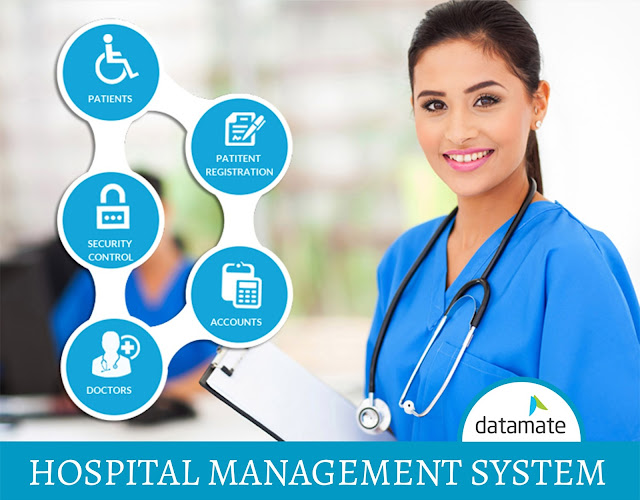
A hospital management system is a software designed to manage all the areas of a hospital such as medical, financial, administrative and the corresponding processing of services. Features HL-7(Health Level-7) interfaces across all modules that facilitate standards conformance. Flow of the f inancial data   with centralized information to the payer modules. Data for the management reviews displays graphically by executive information system (EIS)  . The billing, insurance processing modules effectively process clinical data for efficient payout for health encounters. Objectives Main   objectives of a Hospital Management System  are: Design a system for better patient care. Reduce hospital operating costs. Provide MIS ( Management Information System ) report on demand to management for better decision making. Better co-ordination among the different departments. Provide top management a single point of control. ...

Electronic Medical Record (EMR) Systems

Image
Electronic medicalrecords(EMR) ,is an electronic record equivalent of paper records, or charts at a clinician’s office. EMRs contains informations about treatment and medical history of a patient as it is collected by the individual medical practice. Electronic medical record (EMR) systems is defined as an electronic record of health-related information about an individual.This information can be created, gathered, managed, and consulted by authorized clinicians and staff within one health care organization.This system have the potential to provide substantial benefits to physicians, clinic practices, and health care organizations and can facilitate workflow and improve the quality of patient care and patient safety. Benefits of EMR Implementation By implementing EMR , healthcare providers can track patient data over an extended period of time. It helps to identify those who are due for preventive checkups and screenings and monitor how each patient measures up to cert...